



Rehabilitation after a hip fracture
9 July, 2026
Nutrition and Sarcopenia: The Importance of Musculoskeletal Health in Older Age
10 July, 2026
Why are falls a major problem in older adults?
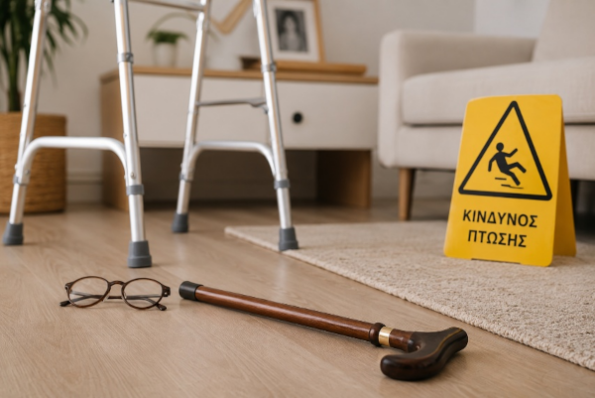
Falls are a major health problem for people over the age of 65. It is known that 3 in 10 people over the age of 65 and 5 in 10 over the age of 80 report a fall each year. In 2021, approximately 45 million falls were recorded worldwide, which indicates an increase of 82% compared to 1990.
A rate of 30% of falls result in an injury that requires medical attention, such as a fracture. Falls are also associated, due to injuries, with disability and limitation of daily activities, but also with loss of confidence in one’s own strength due to the fear of falling again.
Finally, they are a major cause of morbidity after injury in people over 65 years of age, either due to head injuries or fractures, such as hip fractures, with significant health burden from prolonged bed rest and limited mobility.
What are the main risk factors?
Falls are usually not due to a single factor, but to a combination of causes. Muscle weakness, balance disorders, vision and hearing problems, chronic diseases (such as Parkinson’s disease, diabetes mellitus, etc.) significantly increase the risk. At the same time, taking many medications can cause dizziness or hypotension and therefore falls.
Environmental factors also play an important role, such as inadequate lighting in a room, slippery carpets, obstacles in the hallways and inappropriate footwear. Perhaps the most important indicator of a new fall is the occurrence of a fall in the last year.
How can falls be prevented?
Prevention is based on a multifactorial approach by a multidisciplinary team. Initially, it is necessary to assess the risk of falls, in order to determine the level of fall risk and to understand individual risk factors, so that appropriate interventions can be made.
Regular physical exercise, with an emphasis on strengthening the lower extremities and balance, has proven to be particularly effective. In addition, a review of medication by the attending physician, correction of vision problems and adequate intake of calcium and vitamin D, where indicated, contribute to reducing the risk.
Equally important is the creation of a safe home environment, with good lighting, non-slip surfaces and handrails in the bathroom and on the stairs. These are some good practices, however, in any case, planning for the prevention of new falls should be entrusted to a team of health professionals, who should take into account the person’s opinion and provide an individualized plan that suits their needs, interests, and capabilities.
What should we do after a fall?
After a fall, even if there is no obvious injury, it is important to inform the personal physician. Investigation of the causes may reveal problems that were not previously diagnosed. If there is severe pain, inability to support or a suspected fracture, immediate evaluation by an orthopedic surgeon is required. At the same time, the fear of another fall should not be ignored, as it often leads to reduced mobility and further loss of muscle strength.
Participation in rehabilitation and prevention programs can help to regain one’s self-confidence and maintain independence. Under no circumstances should we ignore a fall.